
ROBOCOP / ACCESS
Robotic Cochlear Implant Insertion and Patient-Specific Digital Twin
Robotization of cochlear implant insertion (ROBOCOP, 2019–2023), continued by ACCESS (2024–2029): a patient-specific digital twin for cochlear implant surgery.
Project Overview
This line of research on cochlear implant surgery runs in two phases: ROBOCOP (2019–2023), on the robotization of the insertion, followed by ACCESS (2024–2029), on a patient-specific digital twin of the procedure.
Inserting the electrode array into the cochlea is a delicate gesture: the array is flexible, the cochlea is a narrow spiral, and insertion forces can damage the inner-ear structures that preserve residual hearing.
Real-time FEM
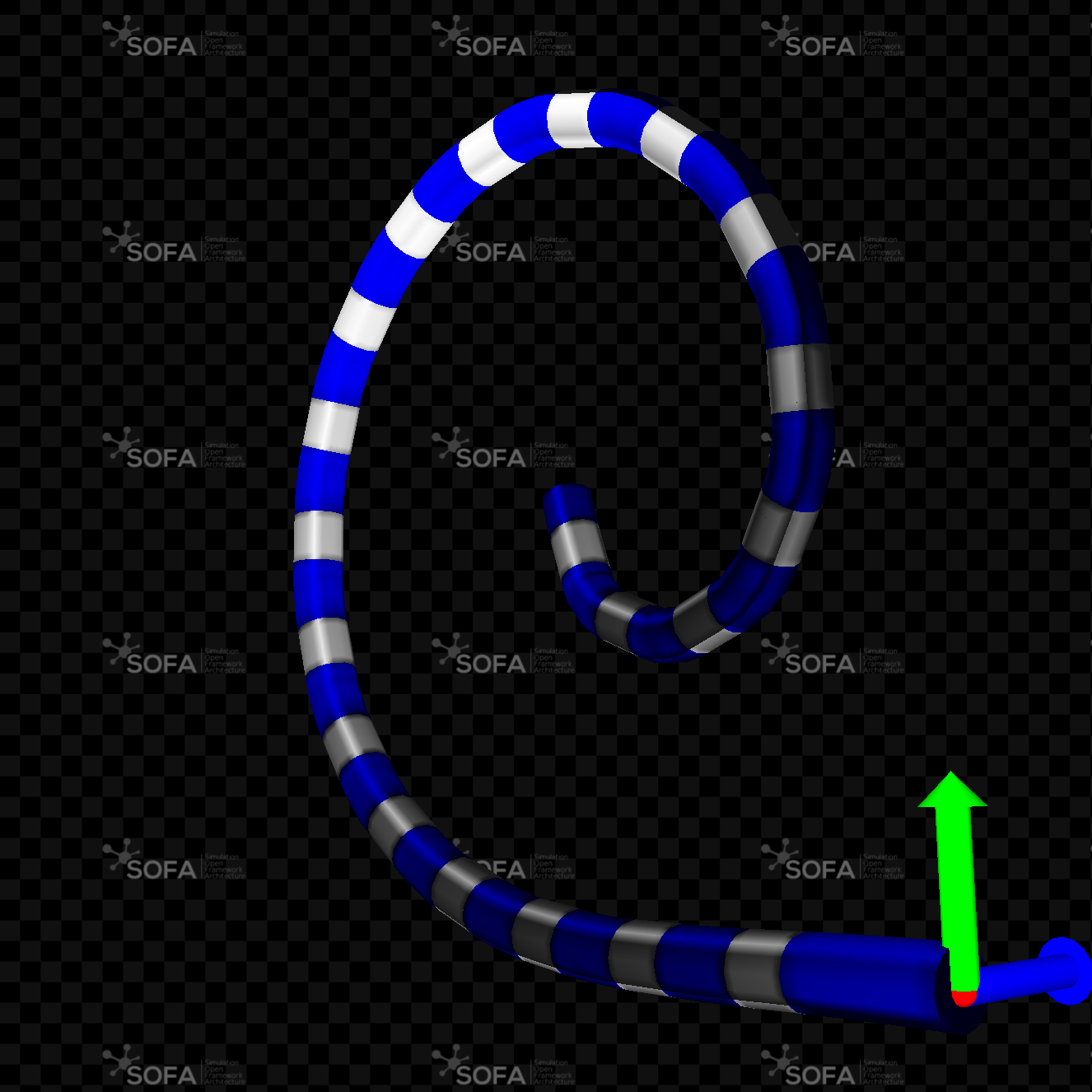
Simulation of the flexible electrode array and its contacts with the cochlear walls during insertion.
Automated Insertion
Robotic insertion driven by the simulation, with navigation and safety constraints.
Patient-Specific Digital Twin
Physical simulation of inner-ear structures from medical images, with augmented reality for intraoperative guidance.
Phase 1 — ROBOCOP (2019–2023)
ROBOCOP aimed at automating cochlear implant insertion. It combined real-time finite element simulation of the electrode array (SOFA), surgical navigation and robotic control, together with the design of an actuated electrode array based on electroactive polymer micro-actuators that can bend under electrical stimulation to reduce insertion trauma (IEEE MEMS 2023).
Phase 2 — ACCESS (2024–2029)
ACCESS continues ROBOCOP with a patient-specific digital twin for cochlear implant surgery: physical simulation of inner-ear structures, medical image processing and augmented reality for intraoperative guidance.
My Role
- Postdoctoral researcher on ROBOCOP from 2019, then principal investigator from 2022 after joining the University of Lille as Assistant Professor.
- Principal investigator of ACCESS.
Publications
- Smart electrode array for cochlear implants (2023) — Ahmad Itawi, Sofiane Ghenna, Guillaume Tourrel, Sébastien Grondel, Cédric Plesse, Giao Tran Minh Nguyen, Frédéric Vidal, Yinoussa Adagolodjo, Lingxiao Xun, Gang Zheng, Alexandre Kruszewski, Christian Duriez, Eric Cattan. IEEE MEMS 2023 – International Conference on Micro Electro Mechanical Systems. HAL · DOI
- How electroactive polymer can be used for cochlear implants micro-robotization? (2022) — Ahmad Itawi, Sofiane Ghenna, Guillaume Tourrel, Sébastien Grondel, Cédric Plesse, Giao Tran Minh Nguyen, Frédéric Vidal, Yinoussa Adagolodjo, Alexandre Kruszewski, Lingxiao Xun, Gang Zheng, Christian Duriez, Eric Cattan. Workshop on Biomaterial Innovations Toward Repair of the Human Body. HAL
Contact me for more information about this project.